Signs Your Tank Water Heater Is Near the End
Most tank heaters give some warning before they quit, and the warnings are easy to write off until the floor is wet.
October 7, 2026 · 4 min read
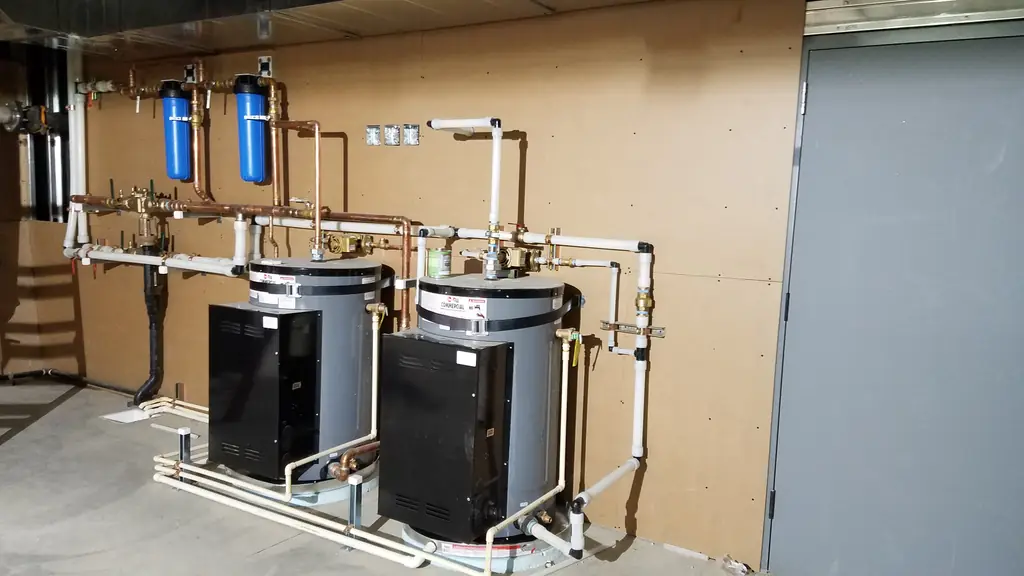
Most tank water heaters give some warning before they quit. The trouble is that the warnings are easy to write off, right up until the day there is water across the utility room floor. If you know what to look for, you can replace the heater on your schedule instead of the heater's.
Age
Start with the age. The data plate on the side of the tank has a serial number that encodes the month and year it was built, though the format differs from one manufacturer to the next. A tank heater that has been in service for a decade or more is in the range where failures start to show up, and the older it gets, the less sense it makes to put money into repairs.
Inside the tank there is a rod, called an anode, that corrodes on purpose so the steel tank does not. Once that rod is used up, the tank itself starts to rust from the inside. You cannot see that happening, which is why age is a better guide than appearance.
Rust-colored water and rumbling
If the hot water comes out brown or orange but the cold water runs clear, the tank is the likely source. Fill a white bucket from the hot tap and then from the cold tap and compare. Clear cold and rusty hot points at the heater. If both run rusty, the problem is more likely in the supply pipes, and a new heater will not fix it.
Minerals settle out of heated water and pile up on the bottom of the tank, and hard water makes it worse. That layer of sediment sits between the burner or lower element and the water, so the heater works harder to do the same job. Water trapped under the sediment boils and makes a rumbling or popping sound. Flushing the tank can clear some of it, but a tank that has gone years without being flushed may not clean up well, and the overheated metal under the sediment wears faster.
Leaks at the tank
Water at the base of the tank is the sign you cannot argue with. First work out where it is coming from. A drip from the pipe connections on top, the relief valve or the drain valve can often be fixed without replacing the heater. Water coming from the tank body itself, or pooling under the heater with no visible source, usually means the tank has rusted through, and a tank cannot be patched. Shut off the cold supply valve above the heater, turn off the gas or the power, and call.
Not enough hot water
Showers that run out sooner than they used to, or water that never gets as hot as it did, can mean a heater on its way out, though not always. On an electric heater, a failed heating element or thermostat is a common cause and can be replaced. On a gas heater, a dirty burner, a weak pilot or a bad thermocouple can do it. If the heater is old and full of sediment, the repair may not be worth chasing. A plumber can tell you which situation you are in.
What to check before you call
- Look at the floor and the base of the tank for water, rust streaks or a damp spot, and check the pipes on top as well.
- Find the data plate and write down the age, the size in gallons and the fuel type, gas or electric.
- On an electric heater, check that the breaker has not tripped. On a gas heater, check that the pilot is lit.
- Check the temperature setting on the thermostat or the gas control.
- Note whether the water runs hot at every tap, to rule out a single bad fixture or mixing valve.
- Take a photo of the tank, the data plate and the piping around it to show the plumber.
Replacing it, at home or in a commercial building
Apex removes and replaces residential water heaters, and installs commercial size water heaters and boilers. At a home, the job is draining and removing the old tank, setting the new one with fresh connections, and checking the venting and the relief valve line. In a commercial building, sizing is a bigger deal, because the hot water demand of a restaurant, a hotel or a plant looks nothing like a family's.
Replacing a heater before it fails also means you choose the day, the size and the type, and you are not making those choices with water on the floor. If your heater is showing any of these signs, call Apex at (509) 575-0148 or request a free quote. The 24/7 service team is there for the days one fails at night.
Apex Plumbing & Mechanical Piping, (509) 575-0148
Call (509) 575-0148More articles
Why Your Backflow Assembly Gets Tested Every Year
A backflow assembly looks like a few feet of brass pipe, but it is the only thing standing between your plumbing and the public water supply.
What Gets Decided Before Concrete Covers Radiant Loops
A radiant slab is the one mechanical system you cannot get back to, so the real work happens while the floor is still open.